Hold on for press release until 27/11/2025 - 09:00 Europe/Madrid
Home care workers in the EU: new EU-OSHA report reveals important safety and health concerns
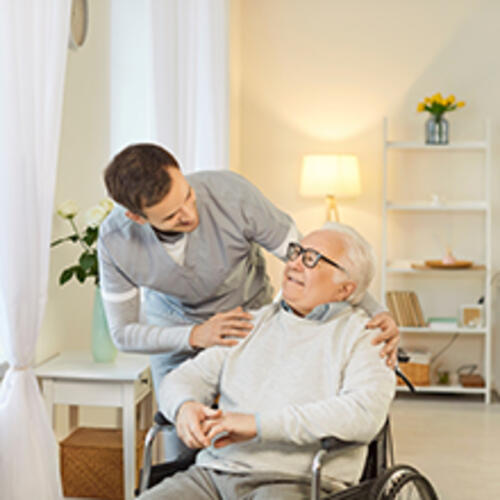
A new report from the European Agency for Safety and Health at Work (EU-OSHA) sheds light on the often overlooked risks faced by Europe’s home care workforce, a growing but frequently neglected part of Europe’s health and social care system. The report highlights the most common occupational safety and health (OSH) risks and outcomes, along with strategies for management and prevention.
Home care: An essential but precarious sector
Home care allows millions of people across Europe to live independently in their own homes while receiving support due to age or disability. However, the very nature of this work, carried out in private homes, often without direct supervision and under highly variable conditions, exposes workers to significant safety and health risks, and poor working conditions.
Among the lowest-paid occupations in the EU, home care is also highly demanding, both physically and psychosocially. Common health problems include musculoskeletal disorders linked to lifting and awkward postures, mental health-related issues such as stress, isolation and emotional strain, and exposure to physical, biological and chemical hazards. These can lead to slips and falls, as well as exposure to infectious diseases and dangerous substances such as disinfectants or medication.
Persistent staff shortages means the sector relies a great deal on migrant workers, who face additional vulnerabilities linked to their migration and employment status.
EU-OSHA’s new report, carried out under the ‘Health and social care and OSH’ research project, underlines the urgent need for improved risk assessment and prevention strategies tailored to home care settings. It also emphasises the importance of involving home care workers in developing and implementing preventive measures.
‘Home care workers are the invisible backbone of our care systems. They support our most vulnerable citizens, yet they often do so under precarious working conditions. This report shows that with the right preventive strategies and initiatives, we can make home care work safer and healthier.’
William Cockburn, EU-OSHA’s Executive Director
Solutions in practice: Case studies and policy pointers
The report is accompanied by six case studies demonstrating how OSH challenges in home care are being addressed across the European Union.
-
Barcelona Social Superblocks (Spain): Reorganises home care services by neighbourhood, improving working conditions through self-organised teams, while highlighting the need for individualised approaches.
-
KoBrA initiative (Germany): Shows the importance of strong stakeholder collaboration, adequate funding and the use of digital tools.
-
Siun Sote’s ergonomics model (Finland): Tackles musculoskeletal disorders among care staff through proactive prevention and training.
-
ProCare project (six EU Member States): Implements innovative measures to prevent and manage long-term carers’ burnout and enhance caregiving skills.
-
Carers, Cared programme (France): Improves quality of care and life for both caregivers and care recipients.
-
EBINCOLF (Italy): A training and certification agency that promotes professional standards and safer workplaces for care workers.
In addition, a policy brief offers recommendations to address current challenges in home care. These include professionalising and formalising the sector, improving equipment and ergonomics, developing sector-specific tools and expanding research on the growing diversity of workers, including better OSH for domestic care workers directly employed by households.
Access the full report or summary “Home care workers – a comprehensive overview of occupational safety and health risks”
Take a look at related publications:
Notes to editor:
The European Agency for Safety and Health at Work (EU-OSHA) contributes to making Europe a safer, healthier and more productive place to work. The Agency researches, develops, and distributes reliable, balanced, and impartial safety and health information and organises pan-European awareness raising campaigns. Set up by the European Union in 1994 and based in Bilbao, Spain, the Agency brings together representatives from the European Commission, Member State governments, employers’ and workers’ organisations, as well as leading experts in each of the EU Member States and beyond.
Now you can follow us on LinkedIn, Facebook, Bluesky, YouTube, Flickr or subscribe to our monthly newsletter OSHmail. You can also register for regular news and information from EU-OSHA via RSS feeds.
https://osha.europa.eu