


EU-OSHA Blog
Back to latest postsActive Ageing – the benefits of age management
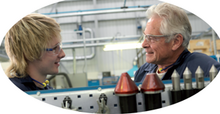
Throughout this European Year for Active Ageing, we’ve been stressing the importance of ‘age management’ in the workplace.
There are all kinds of things that employers can be doing, to improve the fit between the work that a job demands and the capabilities of workers as they get older: everything from reducing physical workloads to introducing regular short breaks into the working day.
Already, many European organisations are taking this kind of action, to help older people stay working longer in the workplace, meaning that organisations themselves benefit from the greater experience that older workers can offer.
One manufacturing company, for instance, has introduced an ‘Age Master’ scheme, which enables employees to take extra days off after they reach the age of 58, and which makes extra allowances for them in carrying out physically demanding work, by giving them extra rest periods.
A European energy company, meanwhile, has introduced what it calls its ‘80-90-100’ programme, whereby older employees can opt to reduce their working time by 20% for a 10% reduction in salary, while still keeping 100% of their pension benefits.
And already we’re seeing these activities paying off. As a result of the Age Master scheme, older employees have been working an extra three years before retiring. The 80-90-100 programme has also led employees to work longer.
Results like these show that older people are very happy to work longer when they are helped to do so. And research shows that there are clear benefits to the organisations that employ them, with lower rates of sick leave, lower work disability costs and better productivity. Good practice examples of age management show a return on investment of between three and five to one euro after a few years.
All of these examples are further explained in an article by Prof. Juhani Ilmarinen.
So it pays to take active ageing seriously, and the benefits are felt not just by those workers and organisations who are directly involved in age management measures. According to research, there is a clear correlation between work ability before retirement and quality of life afterwards, resulting in reduced overall demand on European healthcare systems.
In the coming months we at the Agency will be continuing to be making the case for supporting active ageing. In particular, we will be working on a pilot project that looks at other possible ways of improving the health and safety of older workers, to help support the aims of the Europe 2020 Strategy, of helping workers stay in employment up to retirement age.