




Students from the Spanish vocational education and training (VET) school IES Siglo XXI won first prize in the national short film competition with their video PERDONA - a powerful three-minute story about the importance of digital disconnection for well-being and risk prevention at work.
The competition, organised by EU-OSHA's Spanish Focal Point National Institute for Safety and Health at Work (INSST), invited VET students to raise awareness of occupational risks linked to digitalisation by creating short, creative audiovisual messages.
Data shows that climate change is already affecting workplaces: one third of EU workers are exposed to risks, such as extreme heat, extreme weather events or poor air quality. At the same time, 31% of workers are concerned about the impact of environmental risks on their safety and health at work (EU-OSHA OSH Pulse survey 2025).
Therefore, understanding climate-related OSH risks is key to assessing and managing them. That’s why EU-OSHA is conducting a range of research activities to provide in-depth information for policy, prevention and practice on the challenges posed by climate change.
Climate-driven impacts on OSH
Rising temperatures
A major concern for indoor and outdoor workers. Extreme heat can cause fatigue, dehydration, worsening of chronic diseases, and severe heat illnesses. Physical work heightens body temperature, while heat stress impairs judgment and increases accident risk. Poor recovery between shifts, especially when workers live in inadequately cooled homes, adds to the burden.
Extreme weather events
Floods and wildfires are projected to increase in number and severity across Europe, causing injuries and fatalities. Severe weather conditions may increase the risk of drowning, burns, or frostbite. Emergency workers face additional risks from toxic gases, explosions, and fire hazards.
Air pollution
Elevated air pollution and rising levels of aeroallergens (e.g. higher levels or increased allergenicity of pollen), due to climate change in combination with other factors, boost the risk of respiratory illnesses, and other health issues ─ both indoors and outdoors.
Who is at risk?
Outdoor workers
High exposure to heat, extreme weather, pollutants, and vector-borne diseases are key issues.
- Sun exposure raises skin cancer risk and impairs cognitive performance.
- Extreme weather events increase injuries, stress, and fatalities.
- Diseases like Lyme and dengue are spreading geographically.
Typically affected jobs:
- Farmers and forestry workers: exposed to heat stress, tick-borne diseases, pollutants, allergens, and post-disaster clean-up risks of injury and musculoskeletal disorders.
- Construction workers: often operate in urban heat islands, facing heat stress and accident risks.
- Emergency services: firefighters, police, and medical responders face heat exhaustion, burns, toxic exposure, accidents, and psychological strain.
Indoor workers
Vulnerable during heatwaves, especially in poorly ventilated buildings or heat-intensive industries.
- Heat can impair cognitive performance and exacerbate sick building syndrome.
- Healthcare workers using Personal Protective Equipment (PPE) in hot conditions may suffer exhaustion and breathing difficulties.
- Heatwaves increase demand for medical care, creating high stress and workloads, particularly for ageing staff in urban hospitals subject to urban heat islands.
Policy responses
- EU Member States require employers to carry out workplace risk assessments and set preventive measures to protect workers from any workplace risk. These measures should follow the hierarchy of control, giving priority to technical and organisational solutions before resorting to personal measures.
- Some OSH risks are addressed by specific Directives and the national regulations implementing them.
- EU Member States address climate-related OSH risks at different paces. Some countries include recommended temperature limits in regulations or collective agreements, depending on work type and location.
- Climate change mitigation measures can also introduce new OSH risks, for example in renewable energy, green building, or recycling sectors.
See main reports and related publications
Guidance and tools
- Guidance exists in some EU Member States for managing heat and UV exposure, and some countries regulate working temperatures. Measures include adjusting work schedules, providing rest areas, hydration, cooling systems, and protective clothing.
- EU-OSHA provides practical guidance on managing heat-related risks and what to do if a worker suffers from heat illness.
- Awareness raising on occupational heat-health impacts and adaptation solutions for both workers and employers are important.
- Employers should prepare heat action plans and can use digital tools such as early warning systems or heat alert devices.
- Workers must be consulted and trained in applying preventive measures.
Looking ahead: Foresight study on OSH implications of future climate change-related developments and crises
This study explores how work will adapt to the “new normal” shaped by climate change and what this means for protecting workers’ safety and health in the decades ahead. Rather than focusing only on immediate risks like heat stress, the study looks at transformative changes and disruptions in working conditions and how policy and practice must evolve. Its insights will help policymakers and stakeholders anticipate unpredictable challenges while ensuring safe and healthy workplaces for the future.
EU-OSHA is part of the European Climate and Health Observatory, a partnership between the European Commission, the European Environment Agency (EEA) and other organisations to help Europe prepare for climate-related health challenges. The observatory provides easy access to relevant tools, data and resources and fosters collaboration among many actors, both locally and at international level.

The European Commission’s Directorate-General for Employment, Social Affairs and Inclusion has launched the Quality Jobs Roadmap, a new initiative intended to improve job quality and drive the creation of high-quality, future-proof jobs for workers and employers across Europe.
It aims to ensure fair working conditions, support workers and employers through the green, digital and demographic transitions, strengthen social dialogue, and improve access to rights.
What’s next? A first-stage consultation of social partners is open until 29 January 2026, with the goal of presenting a proposal for a new Quality Jobs Act by the end of next year. The new law will update EU rules to better protect workers while supporting productivity and competitiveness.
Find out more about the Quality Jobs Roadmap
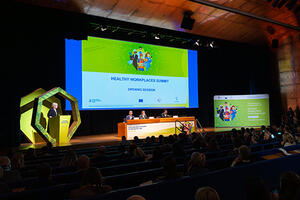
Missed the Healthy Workplaces Summit 2025 on digital workplaces? Don't worry - you can still catch up on our flagship event marking the successful conclusion of our three-year campaign to promote safe and healthy workplaces in the digital era.

Discover some of the courses that the Nordic Institute for Advanced Training in Occupational Health (NIVA) will offer in 2026:
- Innovative Methods for Studying Working Life Patterns, 4-5 March 2026, Helsinki, Finland
- Workers in the Cold, 24-26 March 2026, Tromsø, Norway
- Solutions for Identifying Migrant Worker Exploitation, 25-26 March 2026, Helsinki, Finland
NIVA is a Nordic institute funded by the Nordic Council of Ministers (NCM) with a mission to provide advanced training for researchers, practitioners, and specialists in the field of occupational health and safety.
For more information and registration, visit the NIVA website.
EU-OSHA’s OSH Barometer data visualisation tool now includes new figures on the topics of psychosocial risks and digitalisation risks, drawn from our recent
N/A
EU
Guidance for the safe management of hazardous medicinal products at work
EU & international information
The document includes guidance for handling hazardous medicinal products for workers in different professions and in different workplace situations. It sets out legal requirements, hazards from medidcinal products, handling advice and best practices.