Across our official social media channels, we continue to share knowledge and promote practical resources to help create safer and healthier workplaces across Europe.
The European Union Agencies Network on Scientific Advice (EU ANSA) has reaffirmed the central role of EU agencies in supporting research and translating scientific knowledge into evidence based policy making, through a joint statement signed by Chief Scientists or highest ranking scientific officers from across the network, including EU-OSHA.
Drawing on experience from recent crises such as COVID-19, EU ANSA highlights how EU agencies contribute across the research knowledge cycle – from identifying policy-relevant knowledge gaps and helping shape research priorities, to supporting the uptake of research results in regulatory science and policy implementation.
The network underlines the importance of inter and transdisciplinary research to address complex and interconnected challenges such as climate change, emerging health threats and geopolitical pressures.
EU ANSA welcomes the proposed Horizon Europe 2028–2034 programme and calls for the proactive involvement of EU agencies in future research programming, recognising their collective expertise, scientific networks and role in strengthening trust in science and public decision making.
This is also reflected in EU-OSHA’s work to provide credible evidence and knowledge on current, new and emerging risks to occupational safety and health, helping inform policy priorities, support research and strengthen prevention across Europe.
The event was co-organised by the Estonian OSHVET ambassador, with the participation of our Estonian focal point, Tööinspektsioon. During the seminar, we presented data from our latest ESENER and OSH Pulse surveys and discussed approaches to preventing psychosocial risks at work.
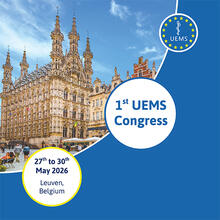
The event brings together medical specialists, educators, trainees, policymakers and partners from across Europe and beyond.
EU-OSHA colleagues join a parallel session to discuss psychosocial risks among healthcare professionals and to present findings from our health and social care research project.
The guidance describes different biological risks that could occur during remediation activities, such as contact with infectious agents, allergens or toxic substances. It supports the identification of such hazards, their assessment as well as options to manage these risks. Biological remediation technologies are being disucssed, including the use of genetically modified organisms. Finally, health surveillance approaches of workers in the remediatin sector are introduced.